September 2026 - The Marrow Thieves by Cherie Dimaline
September 2026 Lit Resistance
Why I chose this book:
To honour Canada’s National Day for Truth and Reconciliation, I think it is important to read and reflect on Indigenous stories and sadly, there are many to choose from the banned books lists across North America. The Marrow Thieves draws a direct line between the fictional recruiters in its dystopian future setting, who hunt Indigenous people for their bone marrow, and the real history of residential schools, including the role that churches played in running them. While this may be seen as inappropriate content for younger readers, the book itself addresses this issue head on, wrestling with when to involve Riri in the nightly stories, which carried historical context on colonial oppression, the horrors of residential schools, and family separation. The book never says what the right answer is, but leaves it to the reader to reflect on how these issues can impact people and how to navigate them with care. North America’s history of violence and colonization involves heavy themes, for sure, and we each have to weigh the risks and benefits of how and when we engage with them. It's a theme the censors miss entirely: kids can handle more than we give them credit for, especially when the story is handled it with care.
One thing that really resonated for me as I read this story was the idea of resilience. Throughout the book, I found myself questioning over and over again how the group could keep moving. Moving in an uncertain direction and into unknown circumstances where there is too often darkness and despair. How do people who have experienced so much pain and heartbreak, with no end in sight, maintain hope? Frenchie, the main character, wrestles with those same questions as the story goes on. The answer begins to take shape when Chi-Boy reminds the group: 'Sometimes you risk everything for a life worth living, even if you’re not the one that’ll be able to live it.' This powerful line reflects the Indigenous philosophy of Seventh Generation Thinking, a worldview that measures today's choices by their impact seven generations into the future. For Frenchie and his family, hope and resilience aren't just about personal survival. They are an act of intergenerational care that ensures future generations will inherit a world where they can dream. By looking past our own lives and experiences, this way of knowing offers strength, resilience and hope when there is so much darkness and despair in the here and now.
To honour this National Day for Truth and Reconciliation, we owe it to Indigenous stories to keep fighting for them. Reading banned books like The Marrow Thieves grounds us in the power of community resilience, ensuring these truths are carried forward for future generations.
Recommended age: 13+
I’d love to hear your thoughts on The Marrow Thieves in the comments below!
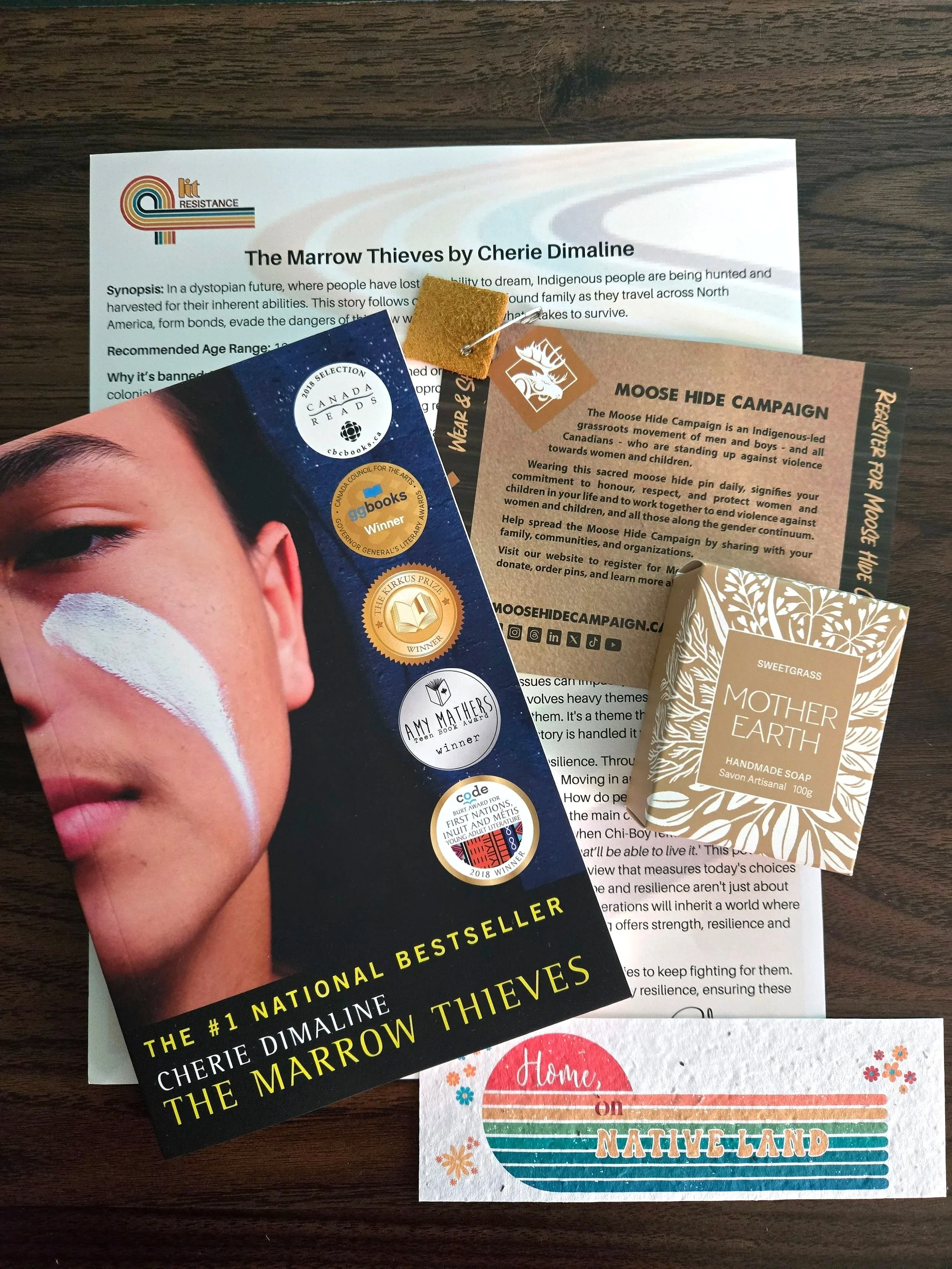
Included in September’s bundle:*
Seed Paper bookmark
Sweetgrass soap
Moosehide pin
*All curated items are hand-picked from small Canadian makers